Your Complete Guide to the 4 Stages of Garment Manufacturing
May 11, 2021
As a fashion designer, your goal is to create clothing that customers will want to buy. And when you’re ready to bring your fashion collection to life, garment manufacturing is at the heart of helping you achieve this goal.
In this guide to the apparel production process, we’ll lead you through the four primary stages of producing and manufacturing your designs. We’ll also show you how a professional clothing manufacturer like TEG can help you every step of the way.
Stage One: Preparation and Planning

One of the most crucial parts of developing a successful fashion line is in the planning process. Your new product development strategy sets the framework for your collection and also determines how production-friendly your designs will be. It’s essential to outline as many details as possible so you can spare yourself headaches later on.
If you’re not sure where to begin, our guide on how to start a clothing line is a great place to start. Crafting a brand involves a great deal of research and groundwork before deciding which niche, demographic, and aesthetic you’ll pursue. Once you identify those elements, you’ll move closer toward the garment manufacturing process.
To create a high-quality clothing line that’s ready for manufacturing, you need a foolproof production plan. Consider this plan to be the foundation of your fashion collection that will help guide you through the final step of garment manufacturing. You’ll also want to set your production schedule and deadlines in this plan.
The team of professionals you work with will help you decide the schedule that works best for your specific project. These experienced pros can lend their knowledge of the fashion industry to determine lead times for the different stages of production so you can plan accordingly. If you decide to work with TEG to produce your clothing line, you’ll have plenty of guidance during this stage.
Mapping out a solid strategic plan involves analyzing and understanding your target customer and addressing their needs. You’ll spend time in the areas of conceptualization, design, scheduling, sourcing, sampling, pricing, and more before sending your collection off for production.
Sketches and Drawings
Before your clothing line can come to life, it must exist on paper. Your preliminary fashion design sketches will be more creative so they can capture the mood, color, and silhouette of the garments. Once you have completed the initial sketching process, it’s time to move on to flat sketches.
Also known as technical flats or fashion flats, flat sketches are 2D drawings that convey your design as though it were laying flat. You can do these by hand, with a program like Adobe Illustrator, or both.
Fashion flats are an integral part of creating a functional sample, so you’ll want to create a front and back flat sketch for each garment and, in some cases, side views as well. These should include all pertinent details, such as seams, top-stitching, and hardware. These flat sketches bring you one step closer to the pre-production stage and creating patterns for your designs.
Stage Two: Pre-Production

Once you have a solid plan and sketches in place, it’s time to begin organizing all the different parts of the pre-production stage. This phase involves sourcing your textiles, pattern making, and pattern grading.
Sourcing Raw Materials
Finding the right textiles is essential in the production planning process. The cost and quantity of your fabrics will impact your budget, the length of the manufacturing process, and the final cost of your clothing for retailers. The fabrications will also influence which types of sewing machines you’ll need and which factories have experience with the textiles you’re interested in using.
One of the many perks of working with a company like TEG is that the experts on your team can help you source materials that are both high-quality and budget-friendly. Vetted and experienced professionals will have a network of connections within the textile industry to help direct you to fabric manufacturers who can provide what you need for your particular designs.
Pattern Making
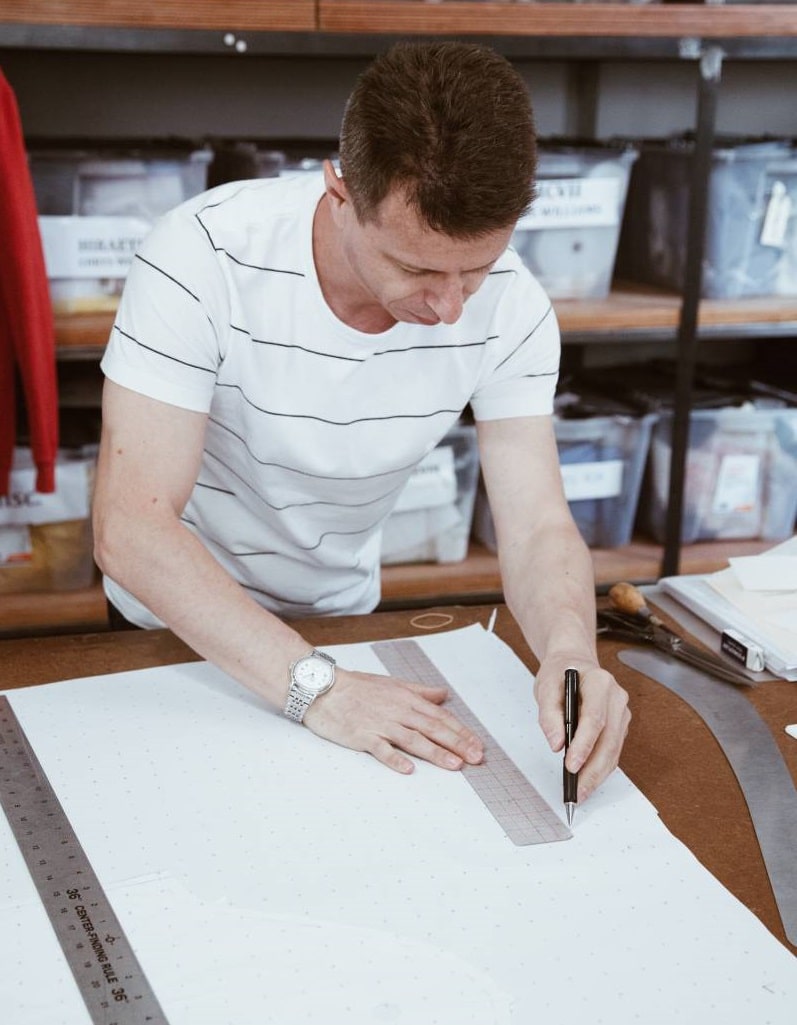
Patterns serve as a template throughout the cutting process, when fabric is cut before assembling it into the final garment. Pattern making is a special skill with industry experts working as contractors or as a part of a team at a production house.
When hiring a pattern maker, be sure to select one with a solid track record and plenty of experience. Clean, high-quality patterns can make or break your designs, so having a pattern maker well-versed in garment manufacturing is a must. What’s more, experts like those on our team at TEG, know how to account for fabric shrinkage for your chosen textiles to ensure that the patterns for garment manufacturing are as accurate as they can possibly be.
Pattern Grading
Pattern grading is the process of taking the patterns of your clothing line and scaling the design to a variety of sizes. Depending on whether you want a full range of sizes and/or plus sizes, this process is a must. Expert pattern makers can advise on sizing, especially if you work with a team of fashion industry professionals.
When it comes to grading, you may also find that you need more than one base pattern to account for large differences between groups of sizes. For example, sizes 2 through 8 may rely on one base pattern, while sizes 10 through 16 may rely on another base pattern of a different starting size.
Stage Three: Production

This phase of the manufacturing process requires your complete attention and collaboration with the garment factory to ensure quality control. When you enter production, you’ll begin with clothing samples, and when you leave, you’ll have the finished products of your clothing line.
Tweak and Test Your Clothing Samples
Clothing samples are indispensable to the fit of your finalized garments. If you’re working with a garment manufacturing team, they’ll guide you through the sample-making process.
Creating a great clothing sample requires a multifaceted approach beginning with a simple flat sketch all the way up to charting your measurement table. Fortunately, it’s a sequential, step-by-step process that TEG has perfected over the years.
Sample clothing will utilize the same graded patterns you’ve already produced in the pre-production stage. The difference is the fabric. Samples use cheaper fabrics like muslin for the first sample. You will need to work with models to fit the sample and adjust it accordingly.
As you make changes to the samples, your garment production team will tweak your patterns as needed. Once you’re happy with the fit and look of a muslin sample, the garment factory you work with will create a sample of the final design.
At this point, you’ll need to rigorously test these samples to ensure quality. Depending on the style of your clothing brand, you should wear and wash the garments multiple times to see if the finished product can withstand wear and tear.
The team of professionals at TEG has decades of experience with fashion design and manufacturing, so we can guide you through the sample-making process. We’ll help you decide when it’s time to green-light the next stage of the apparel manufacturing process.
Ensure Your Sew-By Sample is 100% Accurate

Your sew-by sample is the culmination of all your development and production labor. It’s the final sample handed over to the manufacturer. It should be absolutely flawless and appear exactly how you want your garment to look, down to the finest details. Everything from button placement to where you want your label sewn will need to be conveyed with this piece.
You never want the manufacturer to have to make any assumptions or guesses as to how your garment should look. All the garments will be manufactured to be exact replicas of your sew-by sample, which is why 100% accuracy is so crucial during this step.
Create a Tech Pack
A tech pack serves as a blueprint of your clothing line for the professionals working on your garments throughout every step of the production process. It’s a critical document that contains all the details necessary to produce your garments, including patterns, measurements, textiles, and details for any hardware or embellishments that will be a part of your design. At TEG, our Los Angeles-based studio and factory-level clothing manufacturers will refer to this type of document to ensure every aspect of your order is correct.
Form Your Bill of Materials (BOM)
Creating a thorough Bill of Materials (BOM) means you’ll never be short a button when it comes time for production. A Bill of Materials is a list or spreadsheet that charts every single item — no matter how small — required to craft your garments. These items can be zippers, threads, embellishments, buttons, clasps, and more. The BOM is a necessary part of the tech pack you deliver to your garment manufacturing team.
Techpacker, an online tool for creating professional tech packs, mentions how helpful tech packs are as a communication and organization tool between you and the manufacturer. Akin to following a recipe, if it’s not on the list it won’t end up in the dish — or in this case, on the production room floor.
Include a Measurement Table
The measurement table is a spreadsheet that keeps track of all measurements for each component of your garment. From chest circumference to strap widths, the rows in your measurement table are there to display the specific parts of your clothing that need a measurement assigned.
The columns will hold measurements for all rounds of samples, size ranges, and tolerance levels. The tolerance level column represents the amount of leeway you’ll allow in terms of measurement. You’ll need a measurement table for each garment in your clothing line.
Stage Four: Post-Production

At this point, you’ve gone through the design process, sourcing of raw materials, approval of sample clothing, and garment manufacturing. Here’s what’s next.
Test the Fit and Quality
At this phase, the garment factory that manufactured your clothing line will send you completed garments from the first batch. Now is time for the ultimate test of quality control. Look at every stitch and embellishment, including small details like the labels and buttons. Whether you’re designing T-shirts or formal wear, you’ll need to put the final garments through the wringer.
You as the client have the right to reject the garments if they don’t meet the high-quality standard you were promised. All of the previous steps leading up to this stage should have prevented any mishaps. That said, mistakes happen, and now is the time to iron out any remaining wrinkles (so to speak).
When it comes to fit, enlist the help of models in all the sizes offered in your clothing line. It’s good practice to fit the final product on models that are the same size as the size of your sample. Doing so will allow you to see how a garment fits on a number of different body shapes. You’ll also be able to see how the garment hangs on the body, how it looks with movement, and how comfortable it is. This process will allow you to create a final garment that truly represents your customer.
It’s Time to Start the Garment Manufacturing Process

After you’ve made your way through each phase of garment production, you’ll have finished and perfected products that can be presented to potential retailers.
While the overall garment manufacturing process is daunting, having an expert team behind you can make a world of difference. From creating a personalized production development timeline to helping you fabricate the perfect sew-by sample, TEG will be right there with you every step of the way.
At TEG, our expertise provides high-quality creative services like fabric and trim sourcing that you won’t find elsewhere. Our top-of-the-line sourcing managers skillfully guide you through sampling fabric swatches, negotiating minimums and prices, tracking orders, and more.
Whether you’re an emerging or established designer, we’ve helped over 2,000 designers during the last 15+ years bring their visions to life. We’d love to help you, too!