How to Launch an Ethical & Sustainable Clothing Line
March 17, 2025
The act of creating an ethical, sustainable clothing line is on the rise, and for good reason. More and more consumers are becoming aware of their impact on the environment, people, and animals that make up our home planet. These days, especially, reducing our carbon footprint and promoting the fair treatment of workers needs to be at the forefront. This is why it’s important to partner with a sustainable clothing manufacturer—one that shares these values and ensures that every step of the sustainable clothing production process is done with care for both the planet and its people.
Don’t panic, you don’t need to be perfect. No one is. But if you adopt sustainability practices that work for you and your brand and follow them consistently, you will make a difference in the world.There’s a lot that goes into sustainable clothing production. So to ensure an easy decision-making process for your designs, here’s everything you need to know on ethical and sustainable fashion when choosing a clothing manufacturer.
Sustainability Is Fashionable
Take into consideration this statistic from Environmental Magazine, “almost 90% of consumers see companies that support social and environmental issues in a positive light. Another 88% of customers tend to remain loyal to these businesses.”
90% of consumers! Digest that tidbit for a second before we move on.
And since they don’t necessarily want to give up convenience and accessibility, they’re on the lookout for stellar businesses that share their environmentally-conscious values. To top it off, a 2017 study shows that a vast 81% of the global population feels strongly about businesses stepping up to decrease ecological pressure.
This is huge for fashion designers looking to make their mark in the modern world. The new age of business isn’t just about product quality; it’s also about the specific values that make up the company, which makes sustainably produced clothing highly desired.
What Does Sustainable Clothing Mean?
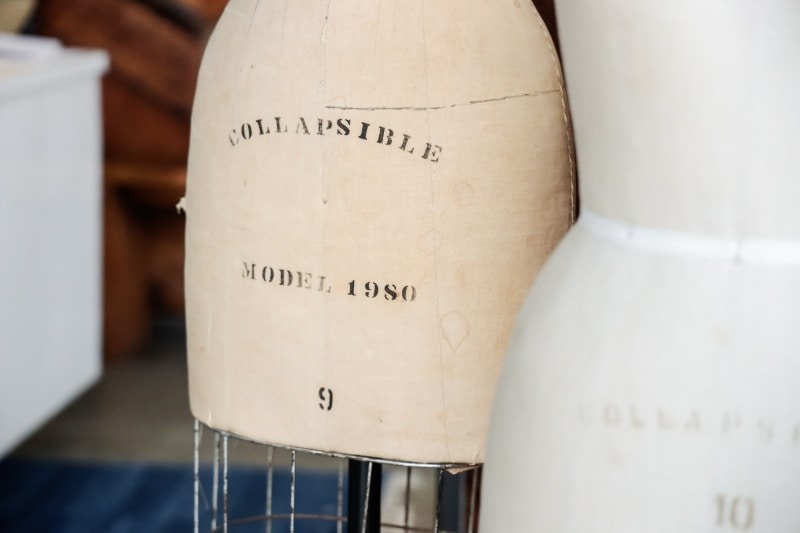
In a nutshell, it’s fashion created in an intentional way: environmentally-friendly design, production, and distribution. It describes everything from individual clothing pieces like shoes and shirts to converting the whole fashion system to promote social justice and eco integrity. To produce sustainable clothing, it’s important to consider every aspect of creation, down to the types of fabrics and how production impacts both the environment and people involved.
So what makes a fashion brand sustainable? How do you create eco-friendly clothing?
Where Should You Source Your Materials From?
One of the first steps toward launching a sustainable clothing brand is to decide where you want to source your materials from and what kind of material you’d like to use.
Let’s start at the beginning by making sure your materials are ethically sourced. Do your research to ensure your materials are sourced with little impact on Earth and people. Then, go for organic materials over synthetic, since they’re biodegradable. You can also use recycled materials here.
When it comes to textiles, check to see that they’re eco-friendly. Lastly, look for the use of natural fibers and dyes, rather than chemically-infused ones.
What a sustainable fashion brand needs to look for in fabrics and other garment materials:
- Ethical origin
- Organic materials vs. synthetic
- Recycled materials
- Eco-friendly textiles
- Natural dyes
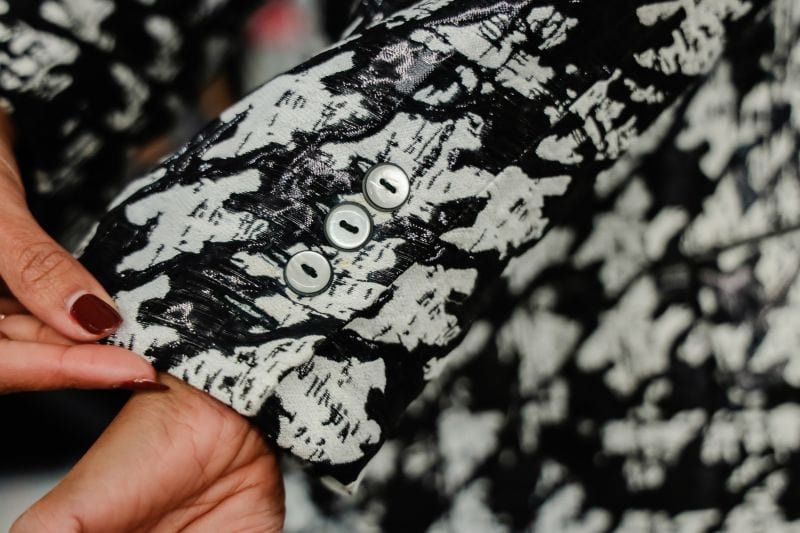
So what makes a fashion brand sustainable? How do you create eco-friendly clothing? Well, one of the first steps is to decide where you want to source your materials from and what kind of material you’d like to use. As said above, using eco-friendly materials is very important, since half of the time recycling doesn’t happen.
Let’s start at the beginning by making sure your materials are ethically sourced. Do your research to ensure your materials are sourced with little impact on Earth and people. Then, go for organic materials over synthetic, since they’re biodegradable. You can also use recycled materials here.
When it comes to textiles, check to see that they’re eco-friendly. Lastly, look for the use of natural fibers and dyes, rather than chemically-infused ones.
What a sustainable fashion brand needs to look for:
- Ethical origin
- Organic materials vs. synthetic
- Recycled materials
- Eco-friendly textiles
- Natural dyes
Take a Look at Fabrics First
The most obvious place to start your sustainability practice is with the fabrics you choose. The sustainable choices here are overwhelming, and you might be tempted to simply throw in the towel (making sure it’s 100% organic cotton, of course)!
First of all, consider whether you’re using natural or manufactured fibers. Natural fibers, like cotton or wool, come from either a plant or animal source. Old school manufactured fibers, such as nylon or polyester, are made using chemicals and other synthetic processes.
However, recent advancements in textile technology have brought about a new wave of manufactured fabrics that are actually eco-friendly. The current leaders in this category are Hemp, Tencel and Recycled Polyester. What’s more, new fabrics are popping up daily, including some made of cactus, pineapple, and even coffee grounds!
Next, talk with your fabric vendor in detail about the sustainability of their product offerings. If the product they offer is sustainable, they will be proud of that fact and happily share any information with you, including industry certifications which you can then share with your customer. (We’ll cover certifications in more detail later in this article.) Certifications aren’t easy to get and promoting them can go a long way towards making your eco-conscious customer feel confident in buying from you.
Look to the Past, a.k.a. Deadstock and Upcycling
Upcycling. Recycling. Pre-owned. Dead stock. Surplus. Repurposing. Whatever you want to call it, using garments or fabrics from someone else’s previously existing inventory can save untold amounts of resources. And it can drastically limit the amount of waste the fashion industry is responsible for.
This is also where the socially-conscious designer (you!) can save not only precious environmental resources, but …drum roll please…a bit of money as well.
Leftover fabric and trims that are the result of overproduction or over-ordering on part of designer brands are available for the taking, often at heavily discounted pricing.
Finding Hidden Gems with Deadstock
While the phrase “deadstock” fabric has some unfortunate connotations, we highly encourage you to think twice about it. Deadstock does NOT necessarily mean it is defective or damaged (although it COULD). What it typically means is that somewhere along the line, production or creative plans changed, and designers (or manufacturers) are left with unused fabric inventory sitting in warehouses. And make no mistake, there are shelves and shelves of it!
So, how do you get your hands on this precious resource you ask? It’s a lot easier than you might think.
The re-selling of deadstock fabric is a thriving industry and there are many enterprising fabric vendors dealing specifically in deadstock fabric and trims. So not only can you possibly score some stunning fabric from high-end designers from around the world, the price per yard will most likely be heavily discounted! Sounds like a windfall for the environment, and for you.
Using deadstock requires some serious planning on your part. It’s always a good idea to have some idea of what materials you want to work with beforehand. Also, your use of the deadstock fabric is always limited to the amount that the vendor has on hand. We can’t stress this point strongly enough! Once they sell through it, there is no more to be had.
Therefore, if you decide to use deadstock fabric for a certain garment, you must plan ahead. You’ll need to know how many units you plan to produce and the fabric yield per unit. Allow for about 10 – 15% extra yardage in your calculations.
With some perseverance and planning, it’s a viable alternative to buying new. Even some “majors” are testing collections using this approach. New for 2022, ASOS is throwing their hat in the sustainability ring with their “circular” brand, Thrift+.
A word to the wise, there have been some rumblings and rumors in the fashion industry that there is fabric out there labeled as “deadstock” which isn’t actually deadstock at all. Instead it is purposeful overproduction by fabric manufacturers. So if you’re going to go the deadstock route, be aware of the ethical implications of advertising your brand as “deadstock.” And always discuss the origin of your deadstock fabric with the seller.
This leads us to another recycling possibility, and that is “upcycling.”
Breathing New Life Into Fabrics with Upcycling
“Reuse (discarded objects or material) in such a way as to create a product of higher quality or value than the original.”– Oxford English Dictionary
Some of the most interesting garments you’ll find come from the creative process known as “upcycling.” Upcycling is making new pieces of clothing by cutting and sewing used garments and other textiles. It gives new life to old items and extends the time they are being used. Some upcycled clothes are even biodegradable or recyclable at the end of their lifecycle.
Upcycling lives in stark contrast to mass production and bulk manufacturing. As we discussed earlier, while there have been significant improvements, the fashion industry has a long way to go before it can be considered “environmentally friendly.” Upcycled clothing has the massive potential to bring down carbon emissions and the global warming contribution of the textile and apparel industry.
That said, just like working from deadstock, upcycling requires a lot of research, planning and creativity. Maybe even more so. If you want to create garments in bulk that are similar to each other, you need to find your “raw materials” in bulk. One way to do this is to build a relationship with a good “rag house.” A rag house sorts and organizes discarded garments, and resells them in bulk, usually by the pound.
Designing via upcycling is really a numbers game. You’ll find it works best from garments that were originally produced in very large numbers to begin with. Think jeans, sweatshirts, tee shirts, polo shirts, and even military surplus. These categories will offer you the most raw materials in the same fabric category.
In other words, you probably aren’t going to find large numbers of similar cocktail dresses at a rag house. Unless you are very persistent, or very lucky.
That said, if you find a single garment that sparks your creativity and you want to use it, go for it! Why not add some “one-of-a-kind” styles into your collection? Offering a “one of a kind” creation is often a great marketing tool. And is about as sustainable as fashion gets!
Sustainability Certifications
Certifications that confirm your status as a sustainable clothing brands aren’t easy to get.
Promoting them can go a long way towards making your eco-conscious customer feel confident in buying from you. We recommend touting your certifications in all of your communication with your customer, be it on your website, social media or hang tags!
Here are some certifications to look for:
USDA Organic Certification
Within the United States, any commodity certified as organic had to be grown on land that hadn’t used any prohibited substance (fertilizers, pesticides, etc.) for at least three years. However, this only certifies the agricultural processes and does not guarantee that the raw material hasn’t been processed or dyed with harmful chemicals.
Global Organic Textile Standard Certification
Unlike the USDA certification, the Global Organic Textile Standard (GOTS) certifying organization certifies from the first point of processing all the way through the dyeing and manufacturing stages of the fabric. GOTS essentially picks up where agricultural certifiers (such as USDA) leave off.
GOTS has a specific list of requirements to certify facilities. A “made with organic” label from GOTS requires that 70% of the garment contains organic fibers. Conversely, an “organic” label must have a minimum of 95% certified organic fibers.
Are Other Sustainability Certifications Worth Pursuing?
USDA and GOTS are not the only clothing certifications available. There are others that are equally viable. These include Global Recycled Standard (GRS) and Standard 100 by OEKO-Tex.
Keep in mind, not all fabric certifications are the same. BCI and Fairtrade certifications, for example, only indicate that more sustainable farming practices were used—not that the fiber itself is organic.
Unfortunately, unsubstantiated claims of “sustainability” and “organic” have become a growing concern (AKA “greenwashing”). Greenwashing is, per Google, disinformation disseminated by an organization so as to present an environmentally responsible public image. Thankfully, oversight organizations are cropping up everyday with a main goal of uncovering unfounded sustainability claims.
Still, do your own research. If a fabric vendor provides you with a certification, it’s very simple to verify the viability of that certification with a simple google search.
Choosing the Chemicals Used in Your Clothing Brand
Just like high school chemistry, this is the discussion no one in the fashion industry likes to sit through. It’s a complicated subject, and the plain truth is, there are many chemicals used in the textile industry. Most of them are used for processing raw fiber and for dyeing.
What Chemicals Go Into Typical Clothing Production?
According to oecotextiles.com (be sure to check out this very wise and detailed source), “During manufacturing, it takes from 10% to 100% of the weight of the fabric in chemicals to produce that fabric. The final fabric, if made of 100% natural fibers (such as cotton or linen), contains about 27% (by weight) in chemicals. And many of those chemicals are simply not benign.” Yikes.
To continue, “Most fabrics are finished in what is called “wet processing” where the process is accomplished by applying a liquid – which causes some sort of chemical action to the textile – as opposed to “dry processing”, which is a mechanical/physical treatment, such as brushing.” In other words, look for “dry processing” whenever possible.
And here are some of their thoughts on fabric dyeing: “All synthetic dyes and chemicals are hazardous to the environment. The wastewater from the dyeing industry is considered to be the most polluting of all given its volume and composition. It is estimated that 20% of industrial water pollution globally is attributable to the dyeing and treatment of textiles.”
Okay, that’s it for the bad news. The good news is all is not lost!
Creative, Earth-Friendly Chemical Options for Your Brand
Some inventive textile companies are creating color without dyeing the fabric. Sounds impossible, right? But think about it this way, what if you were to create color in the new fabric by only using the colors of the recycled fiber content? Brilliant, right? And that’s only one of the inventive ways people have addressed chemical issues in fabric production.
Printing vs. Dyeing: While printing is not the MOST environmentally sound process out there, conversely traditional dyeing uses massive amounts of water, while printing does not. So, if you can, choose fabrics that are printed instead of dyed.
Dyeing and Bleaching: It comes as no surprise to anyone that traditional fabric dye and fabric dyeing techniques have a very high environmental impact. With the use of harmful chemicals in fabric dye, the high amount of energy that is used, and wastewater that is produced, it leaves a big ole negative carbon footprint.
Sustainable Manufacturing Processes to Look For
Here’s the good news about choosing sustainable garment manufacturing options. According to Eco World Online, “Cold dyeing, dry heat fixation, and vegetable tanning or chrome-free tanning are some processes that textile manufacturers and dyeing houses use to develop eco-friendly fabrics.”
They cite advanced and sustainable fabric processing processes such as:
- Eco-bleaching is a process where non-chlorine substances, like hydrogen peroxide, are used to whiten fabrics without releasing any harmful chemicals in the process.
- Silicates and natural phosphates are used in a popular green bleaching procedure. When silicates and natural phosphates are used together with cow dung, and exposed to sun, it bleaches the natural fabrics.
- Low temperature bleaching is a process which uses peroxide activators to control its decomposition and simultaneously start developing the required whiteness. No methane gas is involved in this method and the emission of carbon dioxide is reduced by up to a whopping 50 percent.
- Dyeing fabrics with a special enzyme solution. Washing specially knitted fabrics with enzymes can also help to remove any excess dye. Using enzymes, rather than chemical additives, carbon dioxide emissions are reduced and ultimately reduces energy consumption.
Next, check out this list of new, eco-friendly, dyeing methods:
- Fiber-reactive dye is a dye that can react directly with the fabric. The dye bonds to the fibers due to a chemical reaction that takes place between the molecules of the fabric and the dye. It is a permanent process effectively making the dye a part of the fabric. Because the color is permanent, articles can withstand many washes and still retain their original color.
- Biodegradable dyes do not require the use of heavy metals, amines and inorganic salts. So they will decompose easily, without leaving any landfill in the environment. Fiber-reactive and biodegradable dyes and pigments can be used to reduce the consumption of water and reduce environmental pollution.
- Azo-free dyes are free of nitrogen-based compounds that release aromatic amines. Traditional azo dyes are organic compounds that contain heavy metals. These contain toxic and carcinogenic substances. Azo-free dyes are free of heavy metals and are used to produce eco-friendly and sustainable textiles.
- Herbal dyes, that are biodegradable and have medicinal properties, have also been developed. It can be used to make textiles with anti-inflammatory, anti-bacterial and anti-allergic properties.
Are the People Producing Your Materials Fairly Treated and Paid?
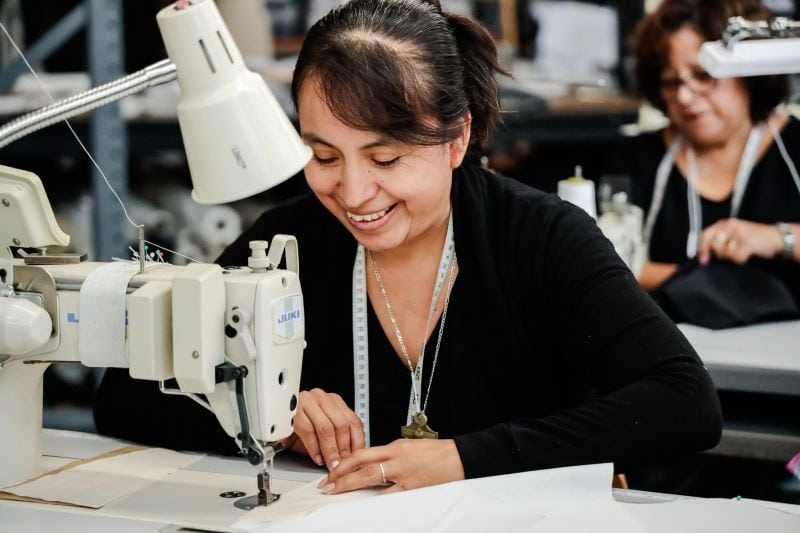
So far there’s been a lot of sustainable talk about the materials going into your new clothing brand, but we’re still missing the other side of the story: ethical fashion. While it’s crucial to consider impacts on the environment when it comes to sustainable clothing production, it’s also essential to understand the impacts on those working in factories.
Unfortunately, sweatshops and forced child labor infiltrated the fashion system long ago. And now, it’s up to current brands to make the ethical choice: ensuring factory workers are being paid well and treated fairly.
To launch a brand with ethical manufacturing practices, watch for things like:
- Safe and hygienic work conditions
- Appropriate pay and working hours
- Full transparency
- Freedom of employment and association
- The eradication of child labor
- Anti-bribery and corruption
- Environmental awareness
- Humane and non-discriminatory treatment
This is where fashion designers can make some of the biggest impacts on the world, using sustainable clothing manufacturers that advocate for human rights and follow through with fair treatment of their people.
Have a Clear Understanding of Your Supply Chain With Ethical Sustainable Clothing Lines
To create sustainable fashion methods, keep in mind the entire process, from start to finish, design to distribution. Every aspect of the system needs to be both ethical and eco-friendly. This means not only revising materials used and manufacturing operations but also taking logistics and other supply chain processes into account.

For instance, is your shipping process sustainable? What about the packaging of the clothes? What are the current laws and regulations in every country along your supply chain?
Know your suppliers, and do your due diligence to investigate all parties involved, especially ones overseas that are harder to monitor. You can return to your supplier contracts and codes of conduct often to reserve the right to audit suppliers and enhance transparency between parties. This way you have more of a handle on what goes on throughout your entire supply chain.
Choose the Right Production Partner For Your Ethical, Sustainable Clothing Line
Launching an eco-friendly brand means finding a development and production partner that understands all the intricacies involved. The Evans Group (TEG) works hard to provide all sustainable, ethical options for our fashion designers and we are proud to offer over 15 years of clothing line manufacturing expertise.
If you’re ready to discuss the steps that lead to the launch of your sustainable clothing brand, we’d love to speak with you. Feel free to reach out to TEG or call us at 800-916-0910.