The Hidden Costs of Fashion Production
May 14, 2025
You’ve planned for fabrics, trims, and sewing. Maybe you’re even digging into the fine details, like zipper types and lining colors. But if you’re an emerging fashion designer, we’ve got a hard truth for you: those probably aren’t going to be the only production costs that matter.
In fact, some of the most expensive parts of bringing your collection to life are the ones that no one tells you about. These are the details left out of early budgets, the ones that tend to sneak up on you, stall your timeline, and derail your launch. That’s why understanding your true clothing manufacturing costs, and how to work through them, is going to be so critical.
At The Evans Group (TEG), we specialize in helping designers uncover the full scope of what it takes to bring your fashion line from “sketch” to “sold.” Below, we break down seven overlooked costs, as well as how to prepare for them.
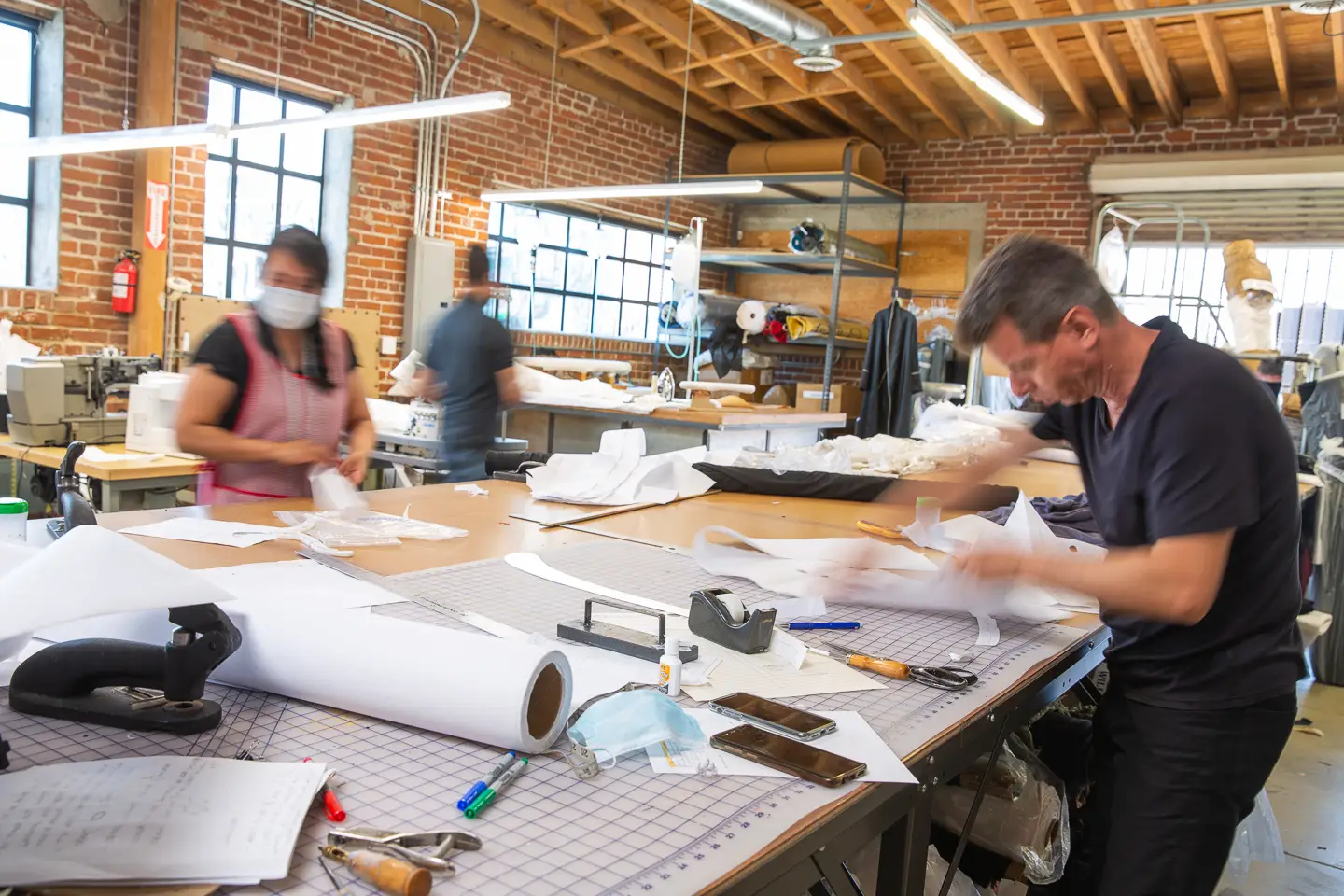
1: Sample Revisions and Pattern Changes
Every designer hopes their first sample is also the final one. The reality is often far, far different. In fact, many collections go through multiple rounds of revisions.
Each adjustment (whether it’s tightening the shoulder or reworking a sleeve) can trigger additional patternmaking fees or even labor costs. And if you haven’t built these into your budget, it can be easy to burn through your funds before you even start production.
Our pro tip? Always treat sample development as a separate line item. Plan for at least two to three rounds of sampling, and work with a team (like TEG’s Pattern & Sample Makers) that prioritizes collaboration and clarity.
2: Sourcing and Shipping Costs
Sourcing is where your creative vision should meet real-world logistics. That means a lot of work. It means hunting down fabrics, trims, buttons, linings. And often, it means ordering from multiple vendors, sometimes in different countries.
Each of these orders brings additional fees, too. Shipping fees. Customs fees. Courier fees. These can add up fast, especially if you’re ordering swatches or small bolts that don’t qualify for bulk rates.
One of the best ways to stay ahead of this work? Working with a full-service production partner. TEG’s in-house sourcing team can streamline your process and minimize freight costs, which helps you achieve all sorts of other logistical wins like avoiding duplicate orders.
3: Minimum Order Quantities (MOQs) and Leftover Inventory
Let’s say you’ve fallen in love with a fabric. But then you notice that the mill requires a minimum of 100 yards when you only need 40.
This can be one of the most painful surprises lying in wait for new designers. Many vendors enforce MOQs, which force you to buy more than you’ll use. This leads to leftover inventory. Or, even worse, it can lead to an expensive choice between waste and compromise.
If you want to avoid this trap, look for partners who support low-volume runs, helping you to find vendors that match your scale. At TEG, we have a boutique production model designed to support small and emerging brands without sacrificing quality.
4: Pre-Production Services
Okay, so you’ve made a lot of progress. You’ve planned ahead, you’ve looked for surprises, and you’ve got a list down. But you still haven’t sewed a stitch yet. What are some items you’ll want to nail on your checklist before there are any more unwelcome surprises?
There’s a world of preparation in pre-production services, including tech packs, grading, digitizing patterns, and fit testing.
Don’t get us wrong. Each of these steps is essential. But each of these steps also comes with its own price tag. A lot of designers forget to budget for action items like fit models or sample fittings, which are often required more than once as part of your overall campaign.
It may be tempting to skip some steps here, but don’t give in to temptation. Skipping these steps can backfire in a hurry. Mistakes made in pre-production are especially expensive to fix later; you’re borrowing from the future to help yourself out in the present. Instead, build these services into the budget from the start. Invest in doing them right the first time, and you may find that your investment pays dividends by being on budget later in the process.
5: Production Delays and Rush Fees
Even with the best possible planning, things can go sideways. A fabric shipment is delayed. Or maybe a vendor misses a trim detail. Suddenly, you’re staring down a launch deadline with problems to fix. And the only way you can make these problems go away is by paying rush fees or expediting your shipping.
And those emergency fixes aren’t so cheap.
That’s why you’ll be smart to include a timeline buffer and contingency fund in your financial plan. Working with an experienced production partner like TEG can help minimize potential delays. Because we know where the bottlenecks often appear, we can teach you how to steer around them before you encounter them for the first time.
6: Quality Control and Rework
You signed off on the final sample. Great. But in the production run, you may notice that some garments come back with problems. Uneven stitching, poorly set sleeves…these are not issues that you want to send to your customer.
So you face a critical question: now what?
Fixing these mistakes is inconvenient and rarely free. Some vendors may charge to rework errors, even if they happened post-approval. And in worst-case scenarios, poor quality can force you to reprint, remake, or even discard entire units.
TEC builds in multi-stage quality control checks so you can catch these issues early. You don’t want them to balloon into expensive fixes, which is why adding on quality control earlier in the process is so important. A thorough review process may seem inconvenient now, but it’s far less inconvenient than stoppages and expenses down the line.
7: Marketing-Ready Assets
You’ve got the collection, but now you need the visuals. Product photography, lookbooks, and branded packaging are the name of the game here. In fact, they’re often considered a separate category. But in many ways, you can consider them the final production stage.
A beautifully made garment can flop if you don’t have strong visuals or compelling packaging to sell it. That’s why professional-grade assets should be part of your clothing manufacturing cost estimation. Don’t treat this as an afterthought; it’s part of the process.
Factor in elements like design, printing, and creative marketing services so you can launch your line with confidence. You’ll find that polish pays dividends for your brand, whether you’re presenting your buyers or even selling DTC.
Bottom line?
Hidden costs aren’t all about fabrics and sewing. Behind every successful fashion launch is a designer who understands the full scope of production costs…while taking the time to plan for them.
From tech packs to trims, from revisions to rush fees, the hidden costs of clothing manufacturing are very real, and you don’t get to hide from making payments on them. Fortunately, with the right guidance, they don’t have to be so scary that you avoid building your campaign at all.
At TEG, we’ve helped hundreds of designers work through every line item with clarity and confidence. From our Los Angeles studio, we offer full-package production to simplify your process, support your scale, and launch your campaign with confidence.
Want help turning your vision into a fully costed plan? Reach out to us.