The Hidden Toxins in Performance Fabrics and How to Source Safer Alternatives
February 15, 2026
Activewear is one of the highest-exposure clothing categories you can produce. These garments are worn tightly against the skin and often under heat, sweat and friction, material choices and applied finished matter more than in many other apparel categories.
At the same time, demand for non-toxic activewear is rising as personal health becomes a stronger buying driver. A growing body of research and regulatory attention has increased awareness that certain chemicals used in textiles may carry health risks, including endocrine-related concerns. As a result, more founders are looking beyond eco-friendly claims and asking a more specific question: what is actually in the materials touching the skin and how can I reduce risk in a way that’s verifiable?
That is where endocrine-safe activewear comes in. What does it mean exactly? It’s an approach that focuses on avoiding high-risk finishes and additives, choosing lower-risk fabric that still performs, and validating the supply chain with documentation and targeted testing.
This guide gives you
- fabrics and finish packages to avoid
- what to choose instead by performance need
- a practical validation workflow with a US-made focus, including how working with garment manufacturers in the USA can support traceability and change control.
For broader context on responsible material decisions, you may also want to learn more about sustainable fabric sourcing and natural fiber in fashion.

What “Endocrine-Safe” Means for Activewear
In activewear, “endocrine-safe” is best understood as a risk-reduction and verification approach. It does not mean a garment is completely “chemical-free”, and it cannot be confirmed by fiber content alone. The goal is to minimize exposure to chemicals of concern and to support your claims with evidence.
When producing endocrine-safe activewear, evaluate the full material system:
- Fabric (and its treatments): the base textile is only part of the story—finishes, coatings, dyeing, and performance treatments often drive the highest risk and require disclosure.
- Prints and graphics: inks, heat transfers, and coatings can introduce additives that are not visible on a fiber label.
- Trims and elastics: waistbands, binding, threads, labels, pads, and closures sit against skin and can add additional chemistry.
- Packaging: polybags, tissue, and inserts should follow the same standards, especially for brands making sensitive-skin claims.
In practice, endocrine-safe production means setting clear restrictions, requesting documentation from suppliers, and using targeted testing where risk is highest, so your standard is controlled, repeatable, and verifiable.
The most effective starting point is elimination: identify the fabric systems and performance treatments that commonly introduce unwanted chemistry, then remove them from your options list before you start sampling.
Fabrics to Avoid (and Why)
When producing endocrine-safe activewear, the highest risk is often not the base fiber. It’s the finishes, coatings, and add-ons applied to make a fabric “perform.” Even when working with garment manufacturers in the USA or American clothing manufacturers, you still need clarity on what has been added to the textile and why.
Treated synthetics and performance fabrics with undisclosed finishes
Be cautious with performance synthetics that promise “extra features” but do not disclose the chemistry behind them. These are common in leggings, bras, and technical tops where brands want odor control, stain resistance, or easy-care behavior.
Watch for claims such as:
- Repellency or stain resistance
- “Easy care,” “no wash,” “wrinkle resistant”
- Odor-control or antimicrobial treatments
If a supplier cannot clearly describe the finish package (and provide supporting documentation), it is not a good fit for non-toxic activewear fabrics. This is where the discipline behind sustainable fabric sourcing becomes practical, not just ethical. (See: sustainable fabric sourcing.)
Fabrics likely to include PFAS-type chemistry or heavy finish packages
For many founders, “PFAS-free” is a key requirement. The risk is highest in fabrics marketed as repellent, weather-resistant, or “protective,” where performance is achieved through a heavier chemical finish stack.
These finish-heavy fabrics often show up in:
- Water- and stain-resistant performance categories
- “All-weather” activewear or outdoor-adjacent pieces
- Any fabric advertised with strong repellent claims without details
If your positioning includes PFAS-free activewear, treat this as a documentation-first decision. “PFAS-free” should be supported by a credible paper trail, not marketing language.
Fabric constructions that rely on coatings, films, or heavy prints for function
Some fabrics deliver performance through a coating, laminate, film, or thick print layer. In these cases, the risk often sits in the coating/print system rather than the fiber content listed on a spec sheet.
Common examples include:
- Laminated or “bonded” constructions
- Coated stretch fabrics
- Heavy print systems used to add structure, shine, or compression-like effects
These can be viable only if the supplier can disclose what is used and you can validate it through testing and change control.
Red-flag marketing language
Certain phrases should trigger follow-up questions immediately, especially if you are building an endocrine-safe standard with your cut and sew manufacturer.
Be cautious of claims like:
- “Non-toxic” or “chemical-free” (without definitions)
- “Clean” or “safe” (without documentation)
- “PFAS-free” (without test reports or traceable disclosures)
A simple rule helps: if a supplier cannot provide proof, treat it as unverified. This is also why brands that care about material integrity often prefer working with apparel manufacturers in the USA, where documentation, communication, and change control are typically easier to manage across a production run.
Once you’ve filtered out high-risk finishes and constructions, the next step is choosing fabric systems that can still meet activewear performance requirements with a lower-risk profile.
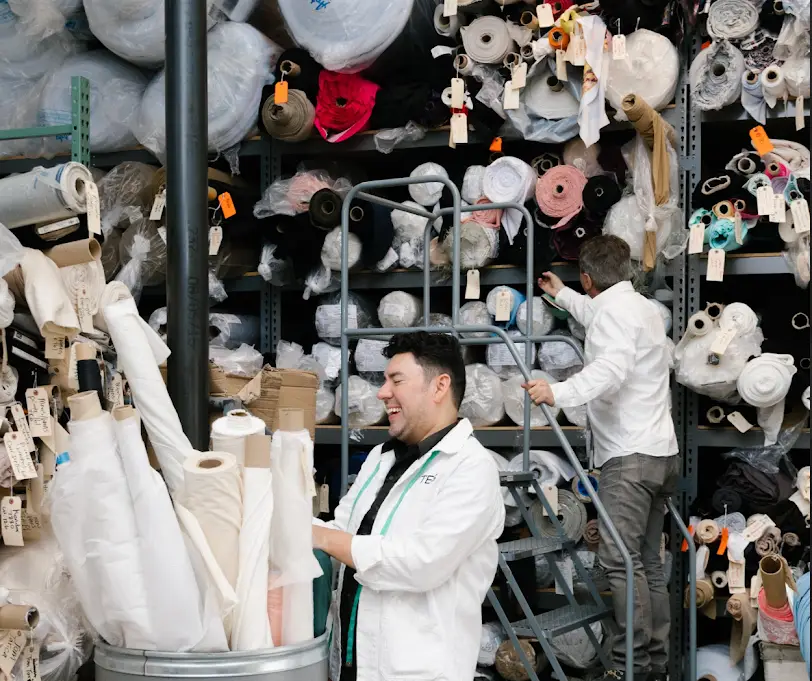
Fabrics Safe to Choose (Practical Options for Activewear)
Endocrine-safe activewear depends on choosing lower-risk fabric systems for your use case and verifying them with clear documentation and change control across production.
Lower-risk fabric strategy for activewear
Start with the performance requirement, then choose the lowest-risk fabric system that can meet it.
- Leggings / compression: prioritize recovery, opacity, and durability. Look for performance knits that do not rely on heavy coatings or undisclosed “odor-control” finishes. Ask specifically what finishing has been applied and whether any antimicrobial treatments are used.
- Sports bras: focus on support, rebound, and comfort against skin. This is where trims and elastics matter as much as fabric—so choose a fabric that performs with minimal finish packages, then plan for verified elastic and lining components.
- Tops / base layers: you often have more flexibility. Breathability and soft hand feel are usually achievable with lower-risk constructions, which makes this category a good place to lead with “clean” positioning.
- Loungy active / studio wear: this is where you can simplify the most. Fabrics with fewer treatments tend to work well here, and you can lean into comfort and skin-contact priorities.
A useful rule: if performance is being promised through a “special treatment,” ask what it is and how it is verified. This mindset aligns with the principles behind sustainable fabric sourcing, but applied specifically to health-focused material risk.
When natural fibers help & when don’t
Natural fibers can be an excellent choice for skin-contact comfort and breathability, especially for lighter-support categories. They are also easier to position for wellness-led audiences. However, in true high-compression applications, natural fibers alone often fall short on stretch recovery and durability.
Use natural fibers strategically:
- Strong fit for: soft base layers, lightweight tops, low-impact sets, and skin-contact pieces
- More challenging for: high-compression leggings, high-sweat training gear, and performance pieces that must maintain shape under load
TEG’s overview of natural fiber in fashion is a helpful foundation here, but for endocrine-safe activewear, the key is still what happens in dyeing and finishing, not only the fiber label.
Blends that can work with the right controls
In many cases, blends are the most realistic path to endocrine-safe performance because they can deliver stretch and recovery while keeping the fabric system stable. The risk is not “blends” themselves. The risk is when “blend” becomes shorthand for unknown chemistry.
To keep blends aligned with endocrine-safe goals, ask:
- What finishes were applied (and why)?
- Are there antimicrobials, odor treatments, stain repellents, or softeners?
- Will the supplier provide consistent documentation and change notifications?
- Are trims and elastics held to the same standard as the base fabric?
This is where working with apparel manufacturers in the USA or cut and sew manufacturers USA can support control. Clear documentation, consistent reorders, and change discipline matter just as much as the fabric choice itself.
Safer dyeing and finishing direction
For endocrine-safe claims, simpler is usually safer. Prefer fabrics that perform without heavy coating stacks, and avoid unnecessary treatments that are added “just in case.” If you do require a finish for a specific performance reason, treat it as a controlled decision: validate it, document it, and lock it for production.
This approach also supports premium positioning. It helps you avoid surprises between sampling and bulk, and it creates a cleaner paper trail for your non-toxic activewear messaging.
Once you’ve identified fabrics that meet your performance needs with a lower-risk profile, the next step is making the standard verifiable through supplier documentation, targeted testing, and change control across the supply chain. Build fabric validation into your workflow early on using the following short check list.
The Fabric Validation Checklist
Step 1: Ask the right fabric questions before sampling
Fiber content is not enough. Before sampling, request disclosure of all finishes and treatments (odor control, stain/stain resistance, easy care softeners), any coatings or performance layers, and whether the mill will keep chemistry consistent across reorders.
Step 2: Use MRSL + RSL frameworks
Use two complementary standards to set clear requirements:
- ZDHC MRSL for chemicals used in processing
- AFIRM RSL for restricted substances in the finished product
Step 3: Request the right documents from suppliers
Make documentation part of approval:
- Compliance statements and finish disclosures
- SDS where relevant
- Test reports that support any “PFAS-free” or “non-toxic” claims
Rule of thumb: no documentation = no approval. This aligns with disciplined sustainable fabric sourcing.
Step 4: Build a targeted testing plan
Test strategically at key risk moments:
- New supplier or new finish/print system
- Pre-production (before bulk commitment)
- After any substitution or material change
Prioritize high-risk areas such as finishes, prints, and elastics/trims.
Step 5: Lock the fabric for production
Prevent substitutions by locking fabric, finish package, and supplier in your BOM/specs. Require re-approval and testing when needed if anything changes — mill, finish, dye method, or “equivalent” replacements.
After you’ve defined how you will validate fabrics, the key is keeping those standards intact from sampling to bulk. A US-made production setup often makes that easier through clearer documentation and charge control.
US-Made Production: Stronger Control, Clearer Proof
A US-based supply chain can make verification more manageable because communication and decision-making are closer to the production floor. Shorter feedback loops help you address questions about fabrics, finishes, and substitutions faster, and accountability is clearer when fewer parties are involved across time zones.
Keep “Made in USA” claims conservative
“Made in USA” is a marketing statement that requires careful substantiation. The FTC standard is commonly summarized as “all or virtually all,” which means you should be able to support that the product’s key components and processing are predominantly domestic. Avoid broad claims unless you can document your basis (materials, manufacturing steps, and supply chain documentation), and use more precise language when needed (for example, “cut and sewn in the USA”).
Compliance context
Regulation is increasing, particularly around PFAS in textiles. Documentation and targeted testing become less optional and more foundational, especially if you are making “PFAS-free” or non-toxic claims. A US-made workflow can make it easier to collect records, enforce change control, and verify that what you approved in development is what is produced in bulk.
Have more questions about non-toxic activewear materials and production? Need a manufacturing partner who can ensure safe fabric standards?
At TEG, we support this in three practical ways. First, we help vet fabrics and suppliers with a focus on disclosure, finish packages, and consistency across reorders. Second, we guide pattern and sample iterations with clear approval gates, then support pre-production readiness so the standard you approve is the standard that can be repeated. Finally, through US-made execution and disciplined documentation, we help reduce surprises caused by substitutions, unclear specifications, or uncontrolled changes between sample room and production.
Reach out today, and we’ll help you map your next steps with clarity and care.