Why Fashion Brands Are Turning to US Clothing Manufacturers
May 23, 2025
Tariffs. World trade uncertainty. Supply chain issues. Whatever the reason’s been, fashion brands of all sizes have looked around the globe recently, considering one crucial question:
Where should we manufacture our clothes?
Everything from the breakdown of global trade to a new consumer push for transparency in sourcing has made overseas production less appealing over time. In some cases, overseas production is even downright risky. As a result, more brands are partnering with US clothing manufacturers. When they do, they gain more control, reduce their lead times, and tell a better brand story.
That’s why we think emerging designers will especially benefit from working with American clothing manufacturers. These manufacturers can combine speed, accountability, and small-batch flexibility for growing companies. But is that all? Let’s explore why the move to domestic manufacturing has gone beyond a trend and turned into a competitive advantage.
1. Navigating the Current Tariff Landscape
Tariffs are more than background noise. In some cases, they’re blowing up budgets.
Recent U.S. trade policies have seen threats of import duties as high as 145% on apparel from China. Even countries like Vietnam and Cambodia, which have offered alternatives to China, may face tariffs up to 49%. The result: added costs. And these added costs make overseas production less cost-effective. That’s even before shipping, delays, or other quality issues may come into play.
For brands looking to protect their margins, working with US clothing manufacturers helps take away the tariffs unpredictability. You don’t have to worry about importing fees if you’re importing domestically. You won’t have to stay glued to the headlines watching for unpredictable hikes. Instead, you’ll have a far more stable pricing point and strategy. That means domestic production gives you more visibility into your total cost, leading to fewer surprises and better planning.
2. Faster Timelines, Fewer Surprises
Speed is nice to have, sure. But in fashion, it’s more than that. In fashion, speed is everything.
Manufacturing overseas is not conducive to speed, however. It often means weeks or even months of waiting. If there’s a holdup at any point, you lose critical time in your product launch. Even worse, you risk losing out on a trend because the shipment arrived too late.
With American clothing manufacturers, timelines will shrink dramatically. The fabrics aren’t coming in from across the Pacific; they’re not working their way through the Panama Canal. Designers can instead communicate in real time, which means the ability to request last-minute adjustments. You can also move from prototype to production in a fraction of the time as you would when importing from overseas.
Faster iterations, quicker market feedback: it’s a less risky way to build your brand.
3. Greater Quality Control and Oversight
When you’re building a brand, your reputation rides on every seam.
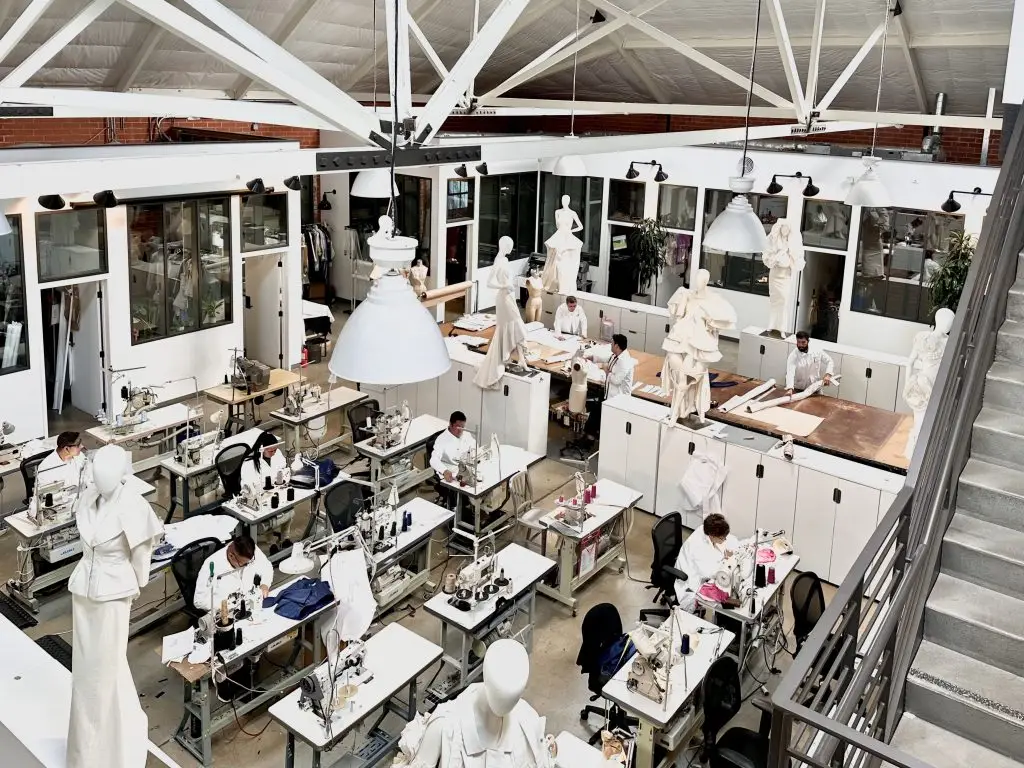
Working with local production partners means you won’t send your designs into the unknown. Instead you can visit facilities. You can review samples in person. You can ensure your garments meet your standards before they move into full production.
This level of access isn’t just convenient. It’s critical. With US clothing manufacturers, there’s less room for error, leading to fewer lost-in-translation moments. And there’s more peace of mind for designers who want things done right the first time.
We should also note that these arrangements can help build better partnerships. Imagine working face-to-face with your manufacturer. You’re not just another email thread or a missed call from a different time zone. You’re a real person. You have real vision. And that kind of relationship can lead to better collaboration, faster fixes, and more long-term trust. When you’re working on tight deadlines, trust is everything.
4. Increased Consumer Demand for Transparency
Let’s admit it. Today’s consumers aren’t just buying clothes. They’re buying your brand’s story and its values.
They want to know where their garments come from, after all. They want to know how they’re made, who’s making them. “Made in USA” labels are growing in importance. Yes, they’re important for their craftsmanship, but they also represent fair labor, sustainable practices, and ethical sourcing.
When you work with ethical American clothing manufacturers, brands can honestly answer questions about their sourcing. It’s a chance to build trust. It’s a chance to differentiate your story. And ultimately, that helps you attract customers who care about impact as much as they do aesthetics.
Remember: it’s not just about your label. It’s about what you can publish on your website. It’s about what you can tell stores when you sell your story and tell them why your brand should be on their shelves. You should spotlight the artisans, materials, and care that go into every piece. That’s what creates a connection between your fashion and the marketplace.
5. Supply Chain Instability Abroad
COVID-19 impacted us all to varying degrees. But one thing it did across the world was expose how fragile the global supply chain can be.
Factory shutdowns and shipping container shortages saw fashion brands facing long delays and uncertainty. Along with those logistical problems came ballooning costs. Even now, some five years after the pandemic started, geopolitical tensions and logistical bottlenecks haven’t quite healed. Offshore production still feels volatile.
Domestic manufacturing can offer an antidote to that instability. If you partner with US clothing manufacturers, you can reduce your reliance on overseas timelines, building a supply chain that you control.
6. Support for Small-Batch and Emerging Designers
Here’s one of the biggest myths about domestic production: that it’s only for big brands and big budgets.
Sure, having a big budget never hurt anybody. But American clothing manufacturers and domestic partners like The Evans Group (TEG) specialize in working with emerging designers who don’t have an out-of-this-world budget. That means we offer low minimums and hands-on development support. These local partners are especially positioned to help small brands grow with sustainable scaling. You won’t overcommit to massive runs or cut corners along the way. That helps you build a solid reputation when your brand is in its infancy.
Local production is also more nimble. You’ll have more flexibility to test ideas, iterate based on feedback, and reduce waste. Consider it a smarter way to launch.
7. Ethical and Sustainable Manufacturing Practices
It’s one thing to say your brand is sustainable. It’s another to prove it.
With domestic production, you can actually see how your garments are made. You can verify working conditions, ask questions, and align your supply chain with your brand values. That’s true whether you’re focused on ethical labor, reduced environmental impact, or both.
Consumers are watching. And when you manufacture with US clothing manufacturers, you’re not just creating clothes. You’re creating a more credible brand that can stand the test of time and the scrutiny of today’s more discerning fashion customers.
If you ask us, at this point, working with American clothing manufacturers isn’t just a nice option for brands. It’s the clear strategic move. It helps touch every part of your business in some way or another, which gives you leverage to build your brand the right way.
Working with domestic partners will help you cut tariff costs and reduce lead times, boosting consumer trust and sustainability efforts with your brand. You’re building something smarter. Something that not only runs smoothly, but is built to last.
And that’s where TEG comes in. We help emerging designers bring their collections to life. We offer local, low-minimum production that never asks you to compromise on quality or creativity. If you’re interested in exploring your options with TEG, great. Let’s talk.