Why Your Garment Looks Different From Your Sample (And How to Prevent It)
December 5, 2025
It’s a familiar (and scary) moment for many designers.
You open a box of finished garments, excited to see your vision fully realized. You pull one out. You lay it flat. And almost immediately, something feels off. The fit isn’t quite right. The fabric doesn’t fall the same way. The garment looks different from the approved sample you signed off on.
What makes this moment especially frustrating is that everything seemed right along the way. The sample looked great. The approval process felt clear. Nothing appeared out of place.
And yet, here you are.
This situation happens more often than designers expect. That’s true even when samples are well-made and approvals are properly documented. The reason isn’t necessarily carelessness. It’s the burden of complexity. Garment production involves all sorts of moving parts, after all. A sample is only one piece of a much larger puzzle.
Understanding why garments change after sampling and how to prevent mismatches can help a lot. You’ll save time. You’ll save money. Most importantly? You might save a considerable amount of headaches. But before diving deeper, it helps to understand the role a sample actually plays in production.

Understanding the Purpose of a Clothing Sample
What a Sample Is (And What It Isn’t)
A clothing sample is a development tool. It’s used to test design intent, construction methods, fit, and overall feasibility before full production begins.
What it isn’t is a guarantee.
Samples are often built in a controlled environment. In many cases, it’s by a single sample maker using techniques that may not be replicated exactly on a production line. They help identify issues early, but they don’t automatically account for every variable that comes into play during manufacturing.
It’s also important to distinguish between development samples and production garments. Development samples are meant to explore and refine. Production garments are meant to repeat consistently, often at scale.
Those are two very different goals.
Why Samples Are Only One Part of the Equation
A sample can guide production, but it can’t replace documentation, communication, or process control.
Without clear patterns, tech packs, construction notes, and approvals, a physical sample becomes open to interpretation. And interpretation is where inconsistencies begin.
Think of a sample as a reference point, not a contract. It shows what’s possible, but it doesn’t lock in every decision unless it’s supported by the right paperwork and process.
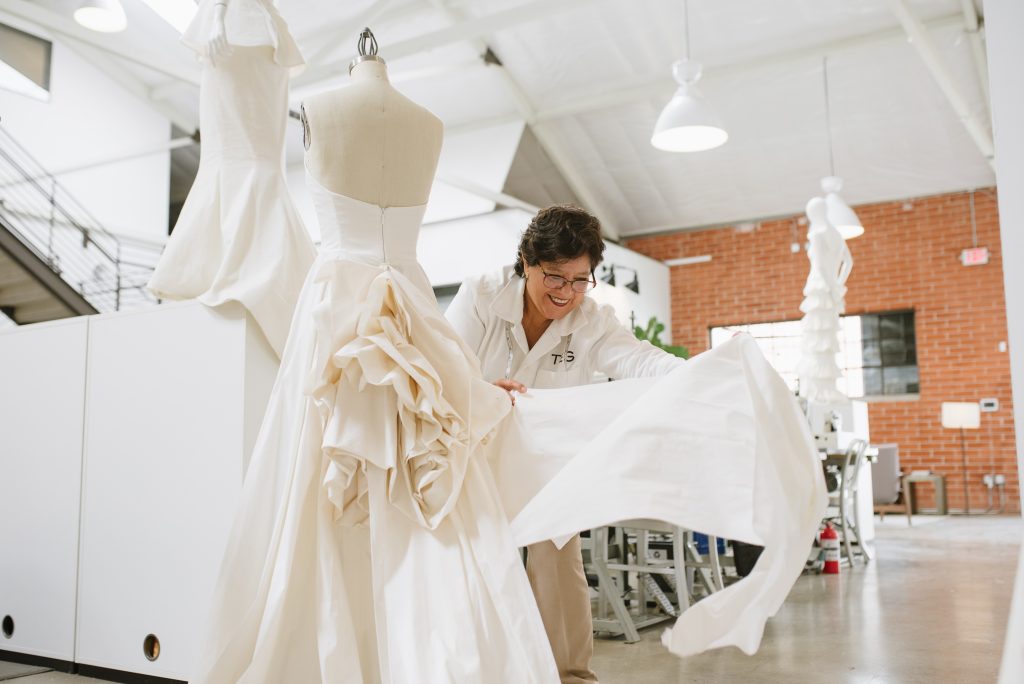
The Most Common Reasons Garments Change After Sampling
Pattern Changes Between Sample and Production
Small changes in your pattern might sound “innocent,” but they can also have an enormous impact on the whole production. A slight adjustment to a sleeve curve, or a seam placement, can alter how a garment fits and moves. Sometimes these changes happen intentionally. Other times, they happen because you aren’t clearly managing “version control.”
If the pattern used in production isn’t the exact pattern approved during sampling, you’re almost guaranteeing that there will be differences. This is why clear pattern tracking and approval checkpoints matter so much, especially as a design moves closer to production.
(For more on this stage of the process, check out our page on pattern sample making.)
Fabric Differences
Fabric substitutions are another common source of the mismatch between expectations and reality. Even small differences in fabric weight, fiber content, or mill sourcing can change how a garment behaves. How it drapes, how it stretches, how it ecovers—these can all be much more different than you imagined, even when considering how they might look similar on paper.
If a sample is made in one fabric and production uses another, the final result may look and feel noticeably different.
Construction and Finishing Variations
Sample rooms and production floors don’t always work the same way. Sample makers might use techniques that emphasize precision and not speed. On the other hand, production lines are all about efficiency and consistent design. Differences in stitch types, seam allowances, machinery, and finishing methods can all affect the final garment.
Without clear construction standards, these teensy-tiny little variations can add up to enormous changes. Keep that in mind.
The Role of the Sample Maker
What a Sample Maker Actually Controls
A sample maker’s job is to translate your design into a physical garment.
They interpret sketches, tech packs, and references. They balance ideal construction with what’s realistically achievable. And they often make judgment calls when details aren’t fully specified.
What they don’t control is what happens later if patterns, fabrics, or construction methods change.
Understanding this distinction helps designers know where issues originate and how to address them effectively.
Why Experience Matters
Experienced sample makers follow instructions, yes. But they go a step beyond that: they anticipate problems. They understand how certain fabrics behave in production. They recognize construction details that may cause issues at scale. And they flag concerns early, before they become expensive mistakes.
Working with seasoned clothing sample makers, particularly those familiar with local production standards, adds another layer of protection.

Communication Breakdowns That Cause Mismatches
Incomplete or Vague Tech Packs
Tech packs are the backbone of consistent production.
Missing measurements, unclear construction notes, or reliance on visual references alone can lead to interpretation errors. What feels obvious to a designer may not be obvious to a factory working across dozens of styles. Clear documentation will reduce guesswork in the future.
Assumptions Made During Production
When information is missing, assumptions fill the gap. Factories may interpret details differently based on standard practices or previous experience. That doesn’t mean they’re wrong. It means clarity wasn’t provided. In manufacturing, “it looks obvious” is rarely enough.
Fit, Grading, and Size Scaling Issues
Why the Sample Size Isn’t the Final Fit
Most samples are made in a single size. Production garments aren’t. As designs are graded across sizes, proportions change. If your grading rules aren’t carefully developed and tested, those changes can distort the original fit and silhouette. Unfortunately, what looks great in one size may not translate cleanly into others.
Testing Fit Across Sizes
Relying on a single fit sample increases the risk of surprises later.
Testing multiple sizes allows designers to catch proportion issues early and refine grading before production begins. It’s an extra step, but one that often prevents larger problems down the line.
How to Prevent Your Garment From Looking Different
Approve the Right Sample
Not all samples serve the same purpose. Proto samples, fit samples, and pre-production samples each play a role in your development process. Understanding which sample you’re approving, and what it represents, is going to be key.
Lock Patterns, Fabrics, and Construction
Changes won’t go on forever. At a certain point, the changes will need to stop. Locking patterns, fabrics, and construction methods into commitment before production can reduce your risk of big-time errors. Last-minute edits may seem minor, but they often have unintended consequences. If you need to freeze changes, it can stabilize the whole process.
Work With the Right Team
Strong collaboration between pattern makers, sample makers, and manufacturers makes a measurable difference in how your garment ultimately ends up. What if you want it to look like how you imagined? Then you’ll need the right people on your side.
You’ll also need reliable communication. When teams communicate early and often, you’ll identify issues sooner and resolve them more effectively. Find out more about how pattern and sample makers bring clothes to life.
Contact The Evans Group (TEG) for common-sense, high-quality sample making in LA if you’re interested in kicking off your accurate samples.