Inside a Garment Factory in Los Angeles: What the Process Really Looks Like
September 15, 2025
Welcome to The Evans Group (TEG), a Los Angeles garment factory. What will you see? The rhythm of creation. Rolls of fabric lining the walls. Cutting tables stretching across the floor. Sewing machines in a steady, unified hum. Skilled hands are measuring and cutting the fabric and moving with the practiced precision of an orchestra.
It’s a world that many designers only imagine from the outside, a world in which sketches turn fabrics into wearable reality. But why are designers so curious about this in the first place? Maybe because a garment factory is where the magic happens, where independent brands take quality fabrics and turn them into objects of desire.
To get a better sense of it, let’s glance behind those curtains. Here’s a step-by-step look at the process that transforms an idea into a finished garment, right here in the heart of L.A.
Step 1: Design Concept and Tech Pack Handoff

Every great collection begins before the first piece of fabric is cut. Designers arrive with vision boards. They sketch out their ideas. They may even begin with sample garments (sometimes finished, sometimes still rough around the edges). And that’s where the real collaboration begins.
Factories like those at The Evans Group (TEG) work closely with designers to review this so-called tech pack. You can think of this as the blueprint for each garment. This document, or series of documents, includes details like fabric type, measurements, seam finishes, trims, and colorways. The development team then studies it carefully, ensuring the design isn’t only beautiful…but easy enough to produce at scale.
This stage often involves some gentle problem-solving, too. What stitch works best for that hem in the sketches? Can the zipper be sourced domestically? Does the structure need additional lining? Each decision has to balance aesthetics with the realities of construction. And each of these decisions has the potential to make or break a smooth production run.
Step 2: Pattern Making and First Sample Creation
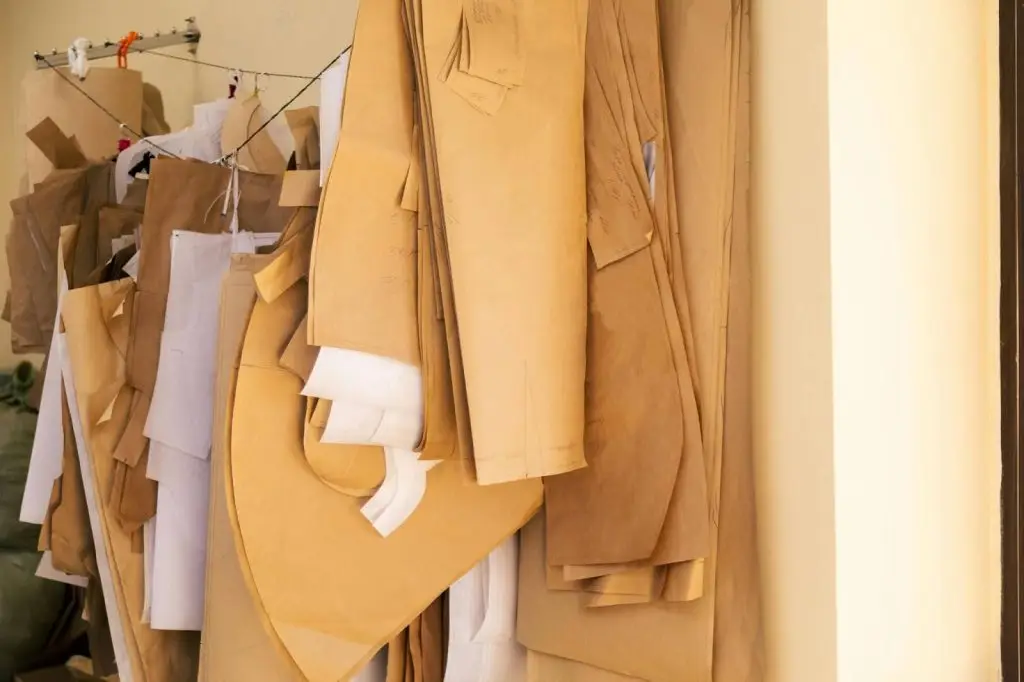
Let’s say you’ve arrived at a finalized concept. What’s next? Pattern makers step in. These are the unsung architects of the fashion world. And their job is to create life out of the two-dimensional sketches, crafting them into patterns that shape and complement the human form.
At TEG, patterns are drafted by hand or digitally. Which is better? It depends on the garment’s complexity, or designer preference. But once these patterns are in hand, they act as templates for cutting the fabric. Ideally, precision is nailed down to the millimeter.
With this design ready, it’s time to build the first sample. Think of this as the tangible prototype of the design. It can be fitted on a live model or dress form, at which point designers evaluate its proportion, drape, and even comfort.

Step 3: Fabric Cutting and Preparation
Now the sample’s approved, meaning the project is ready for pre-production. Bolts of fabric arrive at the cutting tables, at which point they can be unrolled, aligned, and smoothed flat. Every inch counts here. Marker efficiency, or the layout of pattern pieces on the fabric, can make or break either your budget or sustainability goals. (Or, in some cases, both.)
For some garments, cutting is done entirely by hand with shears. For others, high-precision cutting machines can handle the job at scale. Either way, this stage will demand the utmost focus and care, because even the slightest misalignment can affect fit, wasting valuable material.
Ultimately, sustainable brands have to emphasize this part of the process, because using clever patterns or recycled remnants may be key strategies to minimize waste in manufacturing. That’s especially important in L.A. In a city increasingly known for its eco-minded fashion, even the smallest choices can have an outsized impact.
Step 4: Garment Assembly
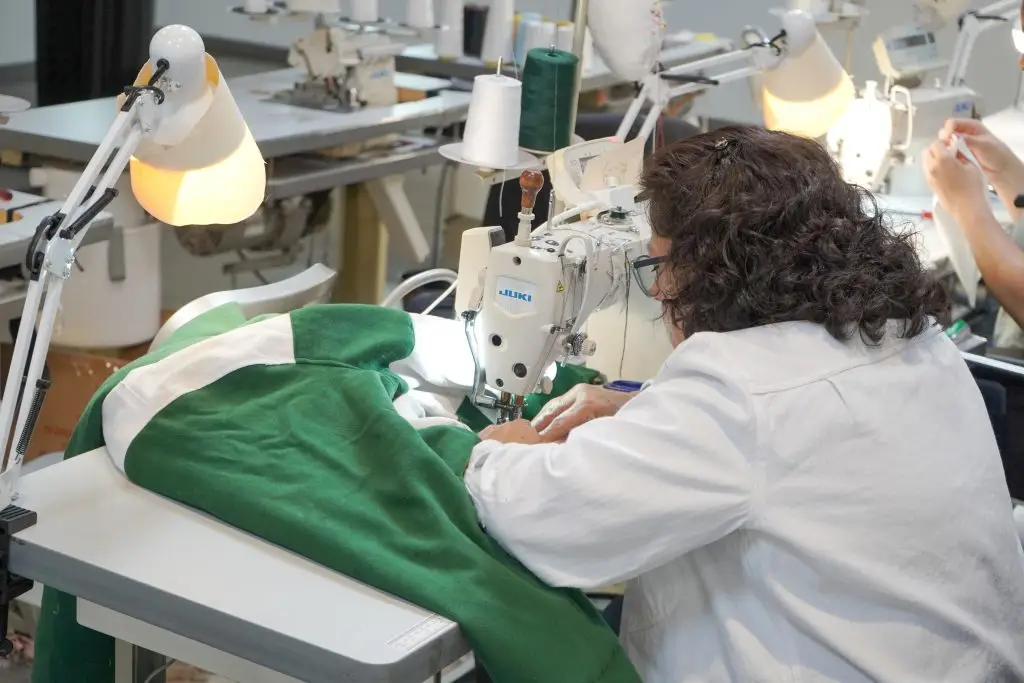
Once the pieces are cut? It’s time to move into assembly. This is the heartbeat of the factory. Here, rows of skilled sewing operators can potentially bring each garment to life. Every operator may specialize in a specific seam, stitch, or finish, passing the work down the line as the full garment takes shape.
This is where the craftsmanship truly shines. The stitching has to be straight and consistent. It has to be strong enough to withstand real-world wear. Operators should consult production-ready tech packs constantly, which will help ensure that every button, label, and seam is aligning with the designer’s standards.
There’s a real artistry in the rhythm of good garment assembly. This is the scenario we painted at the beginning of this article. The symphony, if you will. When dozens of operators are moving in harmony, the room can buzz with a sense of creativity and purpose. Each garment will become a small triumph of coordination and care. Ultimately, that kind of care is what consumers notice when they receive their garment and put it on.
Step 5: Quality Control and Finishing
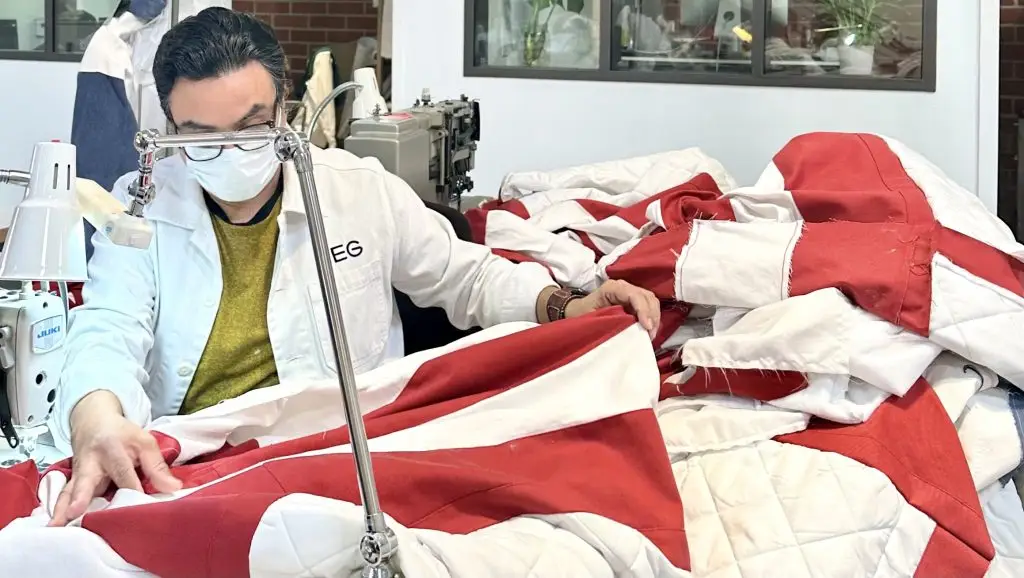
The job’s not done yet. Before any garment leaves the floor, it needs to pass through a meticulous process of quality control. The QA (quality assurance) team should inspect every piece. How’s the stitching? How are the seams? Is the hem right? The overall construction? Trim the loose threads, secure the missing buttons, test the zippers for a smooth glide. Every detail matters.
This is also the stage at which there should be finishing touches. If you want your garment to have the special appearance of a custom sewn-in label, this is when that happens. Maybe you attach a hang tag at this point. Garments may also be pressed/steamed to perfection. For luxury and designer brands, this step is non-negotiable, because every detail hints at the crisp, well-finished quality that your brand is trying to convey.
They say that true craftsmanship is invisible. That’s sort of true. A consumer may not see the hours spent refining the garment. But they’ll feel it in their overall satisfaction; the feeling they get the moment they put the garment on and think: “Yes. This is it.”

Step 6: Packing and Delivery
Now the garment’s complete. The last step is presentation. Each piece gets packed according to the client’s specs. Some designers want their garments hung to avoid wrinkles. Others prefer them folded and bagged for e-commerce or retail. Branded tags, tissue, barcodes, it’s all handled here, with a precision that mirrors the stitching itself.
Now it’s time to double-check the final order and prep it for delivery. Local designers might stop by in person, picking up their boxes straight from the floor. Others rely on freight or parcel delivery, bound for boutiques and fulfillment centers across the country.
At that point, the factory can quiet down. The tables are cleared, the hum fades, and what’s left? A collection ready to meet the world. From sketch to final product – the journey is now complete.
The L.A. Advantage: Why Local Production Still Matters
Let’s be honest: you could manufacture anywhere. But there’s a reason designers keep coming back to Los Angeles.
Multiple reasons, in fact. For example, speed. When your production team is just across town, you can go visit them, you can review with them, you can request changes in real time. No waiting weeks for overseas samples or emails that get lost in translation. You can see your product as it comes to life.
Then there’s the ethical side. Local production means partnering with factories that value fair wages, safe conditions, and respect for skilled labor. For many designers, that alignment matters just as much as the fabric choice itself.
L.A. is a hub for small-batch manufacturing these days, and it’s precisely because of this ecosystem. Creativity thrives here. Designers can stay involved, maintain control, and know for a fact when their garments were built with care…right in their own backyard.
What It’s Like to Work With a Full-Service Factory Like TEG
If there’s one takeaway from stepping inside a Los Angeles garment factory, it’s this: every piece of clothing has a story. It’s practically symphonic in the way it all comes together. But that’s only true when you work with a full-service factory that’s capable of blending it all in perfect harmony.
So the next time you spot that “Made in L.A.” label, you’ll have a clearer picture of what that means. It’s not just a slogan. It’s a promise that creativity, precision, and pride went into your garment.Interested in learning more about launching a collection with TEG? Reach out to us here to find out how you can join this symphony of building a garment from scratch.